
Storage Built for Serious Wine Collection
Wine Cellar Installation in Richmond for homeowners converting underutilized basement space into functional luxury storage
A wine cellar designed for your collection combines climate-conscious construction with custom storage that fits both the bottles you have now and the space you need to expand. Cape Home Remodel installs wine cellars in Richmond homes where basements offer the right conditions for temperature stability and where homeowners want storage that protects investment bottles while creating a space worth showing. The installation transforms a basement corner or entire room into organized, visually distinct storage that handles daily access without compromising long-term aging conditions.
Custom wine cellar installation involves building shelving layouts that fit bottle sizes and storage quantities, selecting wood finishes that handle humidity without warping, and planning lighting that highlights the collection without introducing heat. Climate considerations guide material selection and layout decisions, particularly in below-grade spaces where temperature fluctuates less but moisture control becomes critical.
Request a property evaluation to review basement layout and storage requirements for your wine collection.
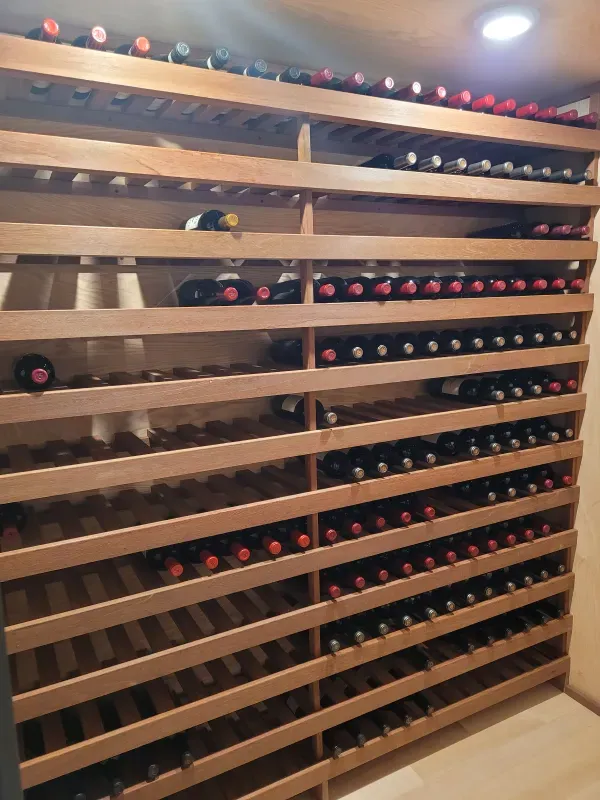
What Custom Wine Storage Actually Accomplishes
Wine cellar construction starts with evaluating basement conditions and determining how shelving orientation, wood species, and ventilation patterns affect long-term bottle storage. Shelving configurations are built to accommodate standard Bordeaux bottles, wider Burgundy formats, and oversized champagne bottles, with spacing that allows retrieval without disturbing adjacent rows. Wood finishes are selected for moisture tolerance and visual warmth, with options ranging from clear-coated natural grain to stained profiles that match surrounding trim work.
Once installation finishes, your basement includes dedicated storage where bottles rest horizontally in custom racks, lighting accents the collection without adding heat buildup, and shelving stays stable even as humidity levels shift seasonally. The space functions as both everyday storage and a destination for entertaining, with visibility into the collection and easy access to bottles without rearranging entire rows.
Design recommendations during installation address whether to include tasting counters, glass enclosures for visual separation, or additional shelving for decanters and glassware. Layout decisions also account for future expansion, allowing additional racking to be added without rebuilding existing sections.
Questions Before Starting Your Wine Cellar Project
Homeowners in Richmond often ask about basement conversions and custom wine storage before finalizing design plans.
What wood species work best in basement wine cellars?
Mahogany, cedar, and redwood are commonly used because they resist moisture-related warping and provide natural insulation, though finish coatings and ventilation matter as much as wood selection in controlling humidity effects over time.
How does shelving layout affect bottle capacity?
Racking depth, row spacing, and whether you use diamond bins versus horizontal cradles all change how many bottles fit in a given footprint, with horizontal racking offering easier label visibility and diamond bins maximizing capacity in compact areas.
When should lighting be installed during construction?
Lighting runs are installed after shelving framing is complete but before final wood finishing, allowing wiring to be concealed behind racking and ensuring fixtures align with display areas rather than structural supports.
What factors affect climate stability in below-grade cellars?
Basement location in Richmond typically provides cooler baseline temperatures than upper floors, but external wall insulation, HVAC vent proximity, and whether the space is enclosed with a vapor barrier all influence seasonal temperature swings and humidity control.
How much maintenance does custom wine racking require?
Finished wood shelving needs occasional dusting and inspection for moisture buildup, but properly sealed and ventilated installations remain stable for years without refinishing or structural adjustments.
Cape Home Remodel works with homeowners throughout Richmond to design wine cellars that fit specific bottle counts and basement layouts. Schedule a consultation to discuss custom shelving, wood finishes, and storage configurations for your wine collection project.