
Outdoor Spaces Built for Actual Use
Deck Building and Deck Renovations in Richmond for properties needing expanded outdoor areas or repairs to aging deck structures
Decks fail when boards rot underneath before surface damage becomes visible, when ledger boards pull away from house framing, or when structural posts settle unevenly into soil. These failure patterns show up in Richmond properties where decks were built without adequate flashing and where freeze-thaw cycles stress fasteners and joists over time. Cape Home Remodel builds new decks and renovates existing structures for homeowners who need outdoor spaces that handle furniture weight, weather exposure, and years of foot traffic without requiring constant board replacement. The work produces stable platforms where you notice solid footing, not flex or bounce, and where water drains off surfaces rather than pooling in low spots.
Deck construction and renovation involve selecting materials based on exposure to sun and moisture, designing joist spacing that prevents deflection under load, and installing flashing that directs water away from the house connection. Composite decking resists rot and insect damage but requires different fastening techniques than pressure-treated lumber, while board orientation and gap spacing affect drainage and expansion behavior.
Schedule a property evaluation to review deck layout options or assess existing structure condition.
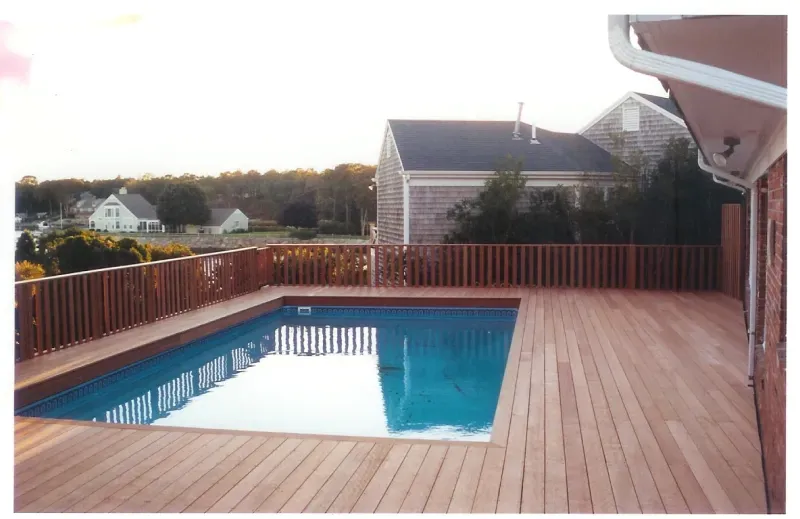
Why Deck Longevity Depends on Hidden Details
New deck construction starts with footing depth below frost line and post anchoring that prevents lateral movement, since shifting foundations cause railing separation and surface boards to gap unevenly. Ledger board attachment to house framing requires through-bolts into solid rim joists, with flashing installed to prevent water from sitting against the house where the deck connects. Joist hangers, blocking, and beam sizing are calculated based on span distances and expected live loads, not just visual appearance from below.
After construction or renovation, you'll see level surfaces where water runs off rather than collecting in puddles, railings that don't wobble when leaned against, and boards that remain tight without cupping or splitting through seasonal humidity changes. Stairs feel solid underfoot without creaking, and the deck remains stable even during gatherings when multiple people occupy the same section.
Deck renovations may involve replacing only the surface boards while retaining sound framing, or removing and rebuilding entire sections where structural members have deteriorated. Material upgrades during renovation allow switching from wood to composite or adding features like built-in seating and pergola attachments.
Common Questions About This Service
Homeowners planning deck projects often ask about material choices and construction methods before finalizing designs.
What's the difference between composite and pressure-treated lumber for deck framing?
Pressure-treated lumber is used for structural framing because it costs less and provides proven load-bearing performance, while composite materials are typically reserved for visible surfaces where rot resistance and low maintenance justify higher material costs.
How deep do deck footings need to be in Richmond?
Footings should extend below the frost line, typically 12 to 18 inches in this region, to prevent heaving during freeze-thaw cycles that can shift posts and cause the deck structure to separate from the house connection.
When should an existing deck be renovated instead of rebuilt?
If the framing, posts, and ledger board remain structurally sound with no rot or significant insect damage, replacing only the decking boards and railings costs less than full reconstruction while extending usable life by another decade or more.
Why do some deck boards cup or warp after installation?
Boards that aren't properly acclimated before installation, inadequate fastener spacing, or insufficient ventilation beneath the deck can all cause warping, particularly when boards are installed with the bark side facing down instead of up.
How does deck design affect long-term maintenance?
Designs that allow airflow beneath the deck, use flashing at all house connections, and avoid trapping debris between boards reduce moisture buildup and the maintenance frequency required to prevent rot and fastener corrosion.
Cape Home Remodel completes deck construction and renovation projects for homeowners throughout Richmond seeking durable outdoor living spaces. Contact us to discuss custom deck layouts, material options, and renovation plans for your backyard.